shopping_cart
Découvrir nos planches


Partager
This is probably THE question we are asked most often, whether by phone, email, or in person at the showroom. And we understand why: when you're just starting out in surfing—or even when you want to upgrade your board—choosing the right material can quickly become a headache. Epoxy, foam, polyester, EPS, PU... between the technical terms and the conflicting opinions found on forums, it's hard to know where to start.
So we decided to lay everything out on the table. No unnecessary jargon, no sales pitch: just what you need to know to choose the right material for your skill level, your surfing style, and your surfing conditions. And since we design boards in all three materials atPrism Surfboards, we have a pretty comprehensive view of the issue.
Let's be honest, foam boards still suffer from a bit of a "beginner board" image. However, they are far from being toys. Modern softboards have little in common with the low-end foam boards that were available ten years ago.
A foam board, or softboard, is an EPS (expanded polystyrene) core covered with a flexible coating—usually IXPE or EVA. Some incorporate one or more stringers (wood or fiber reinforcements) to stiffen the board and improve responsiveness. At Prism, ourStarter Series foam boardsuse a high-density EPS core with a central wooden stringer to offer a good compromise between flexibility and stability in the water.
When you're starting out, you fall. A lot. And that's normal. The foam cushions the impact, which is reassuring when the board comes back at you after a violent wipeout. The soft surface also significantly reduces the risk of injury to you and other surfers around you.
But the main advantage of foam is volume. For the same size, a softboard offers much more buoyancy than a "hard" board. The result: it's easier to paddle, you can catch waves earlier, and you spend more time standing up. When you're learning, that's exactly what you need.
If you want to explore the subject further, we have written a comprehensive article onwhy softboards are perfect for learning to surf.
Foam boards aren't just for beginners. More and more experienced surfers are keeping a softboard in their quiver for shore break days, fun sessions with friends, or days with small, soft waves when there's not much point in taking out a shortboard. It's also the ideal board forintroducing children tosurfing without any stress.
Let's be honest: above a certain level, the foam won't keep up. The flexible coating absorbs some of the energy when you pump, the rounded rails don't allow for really sharp turns, and the feel underfoot is obviously different from a "hard" board. It's an excellent springboard, but a springboard nonetheless.
In summary, foam is for you if:you are a beginner, you surf occasionally, you want a fun and safe board for small days, or you are looking for a board for your children.


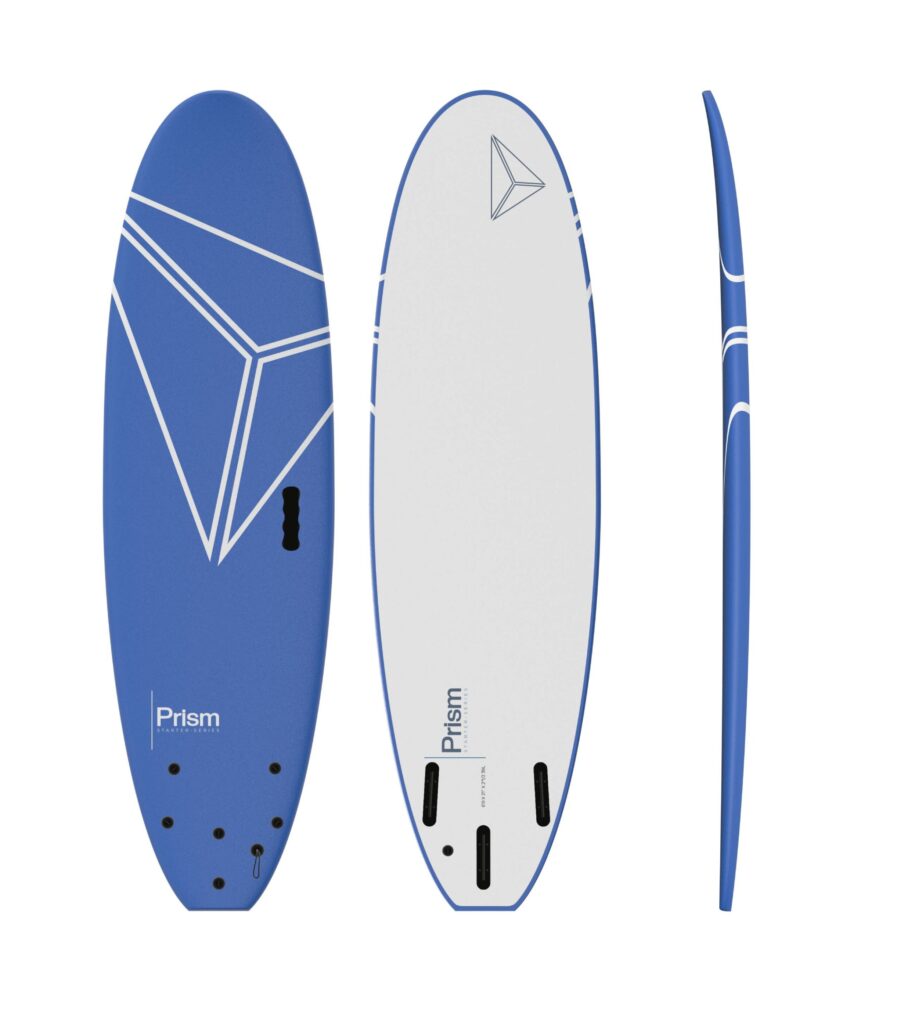
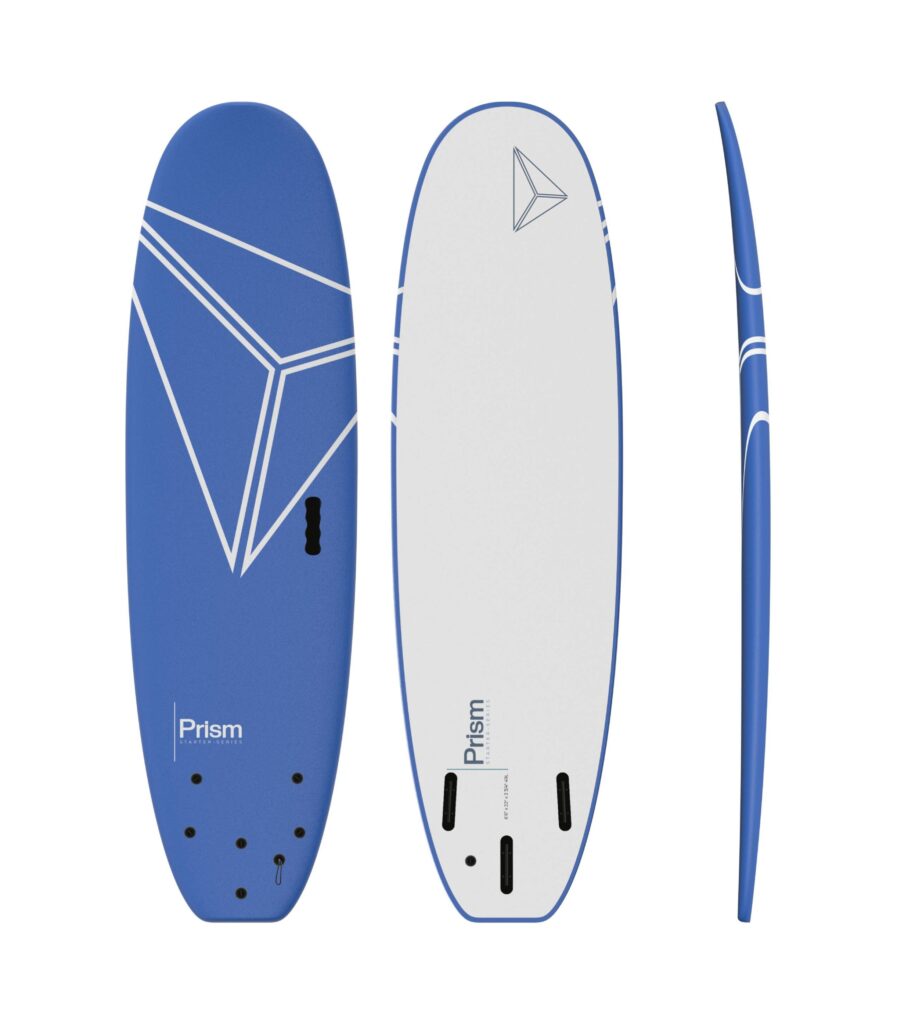

If you had to choose just one material, this would probably be it. Epoxy has become the industry standard for "mainstream" boards, and it's no coincidence.
Please note an important technical point: when we talk about "epoxy boards," we are actually referring to a combination of an EPS (expanded polystyrene) core covered with fiberglass and epoxy resin. It is the resin that gives this type of board its name, but it is the combination of the core and resin that makes the difference.
The EPS core consists of thousands of small polystyrene beads fused together. It is lighter than the PU (polyurethane) used in polyester boards, and it does not absorb water. If your board takes a small ding—an impact—in the middle of a session, it will not soak up water like a sponge. This is a real advantage.
The equation is quite simple: lighter, stronger, more durable. For the same volume, an epoxy board is about 20 to 30% lighter than a polyester board. It also withstands everyday impacts better—car door dings, rubbing on the sand, collisions with other boards in the line-up.
The result: your board lasts much longer. A well-maintained epoxy board can easily last 5 to 8 years of regular use, whereas a polyester board will start to show signs of wear after 2 to 3 years of intensive use.
When it comes to gliding, the EPS core offers naturally superior buoyancy compared to PU. This means that for surfers of the same size, you can use a slightly shorter or thinner epoxy board without losing any paddling power. This is a real advantage, especially forintermediate surferswho want to start reducing the volume of their board to gain maneuverability.
We offer two distinct epoxy ranges, because intermediate and advanced surfers have different expectations:
The Essential Seriesis our "pure" epoxyrange. Ultra-lightweight boards with a minimalist design, available in all shapes—fish,egg,progressive,mid-length, shortboard. It's the best value for money on the market for a board that will last you a long time.
ThePerformance Series rangeincorporates carbon into the layup. Carbon provides extra responsiveness and reactivity: the board returns energy better in turns. It is designed for surfers who already have good technical skills and want a more incisive feel.Performance hybridsare particularly effective in French waves—from beach breaks to point breaks, they work everywhere.
If epoxy has one flaw, it's flex—or rather, lack of flex. Since epoxy resin is stiffer than polyester resin, epoxy boards tend to feel a little "stiffer" underfoot. For casual or intermediate surfers, this is imperceptible. For a very high-level surfer accustomed to the natural flex of polyester, it can change the feel of committed bottom turns.
Another point to note: repairs are a little more technical than with polyester. You can't use polyester resin on an EPS core (it melts it). You must use epoxy resin, which is a little more expensive and a little more delicate to work with. That said, you'll need to repair it less often, as the board breaks less easily.


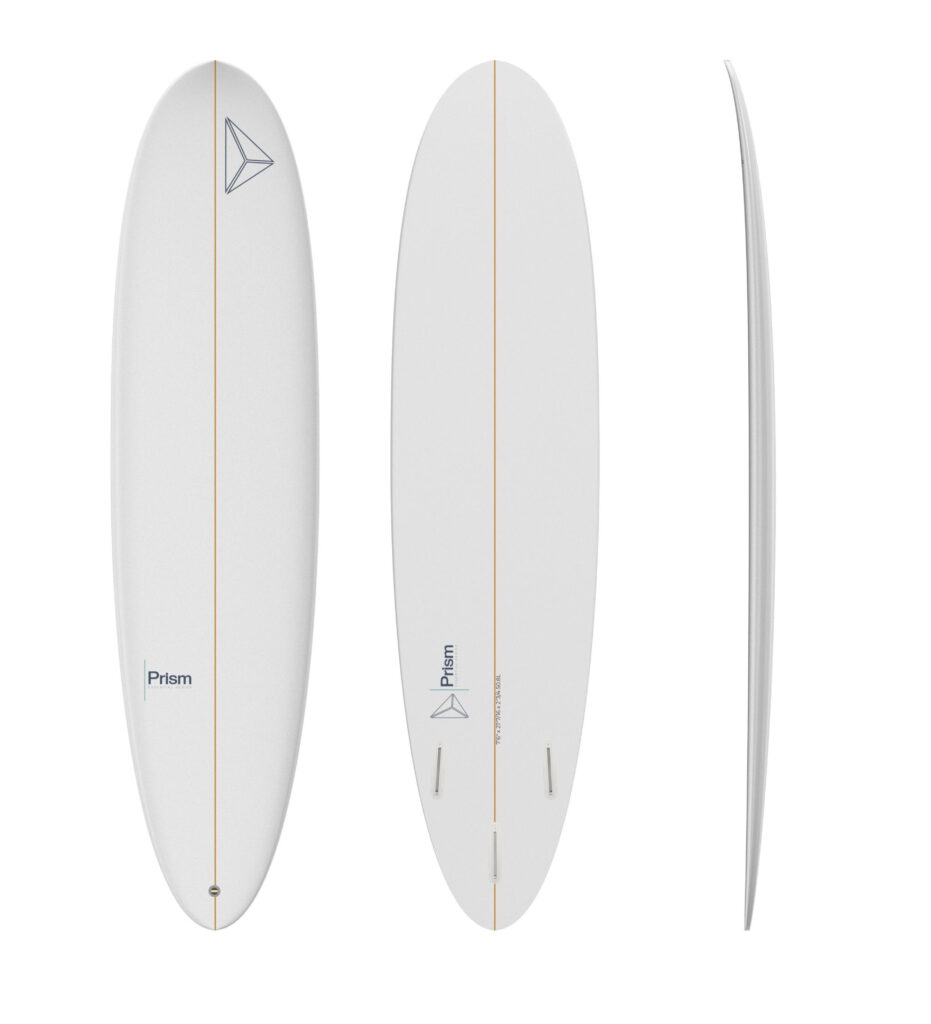

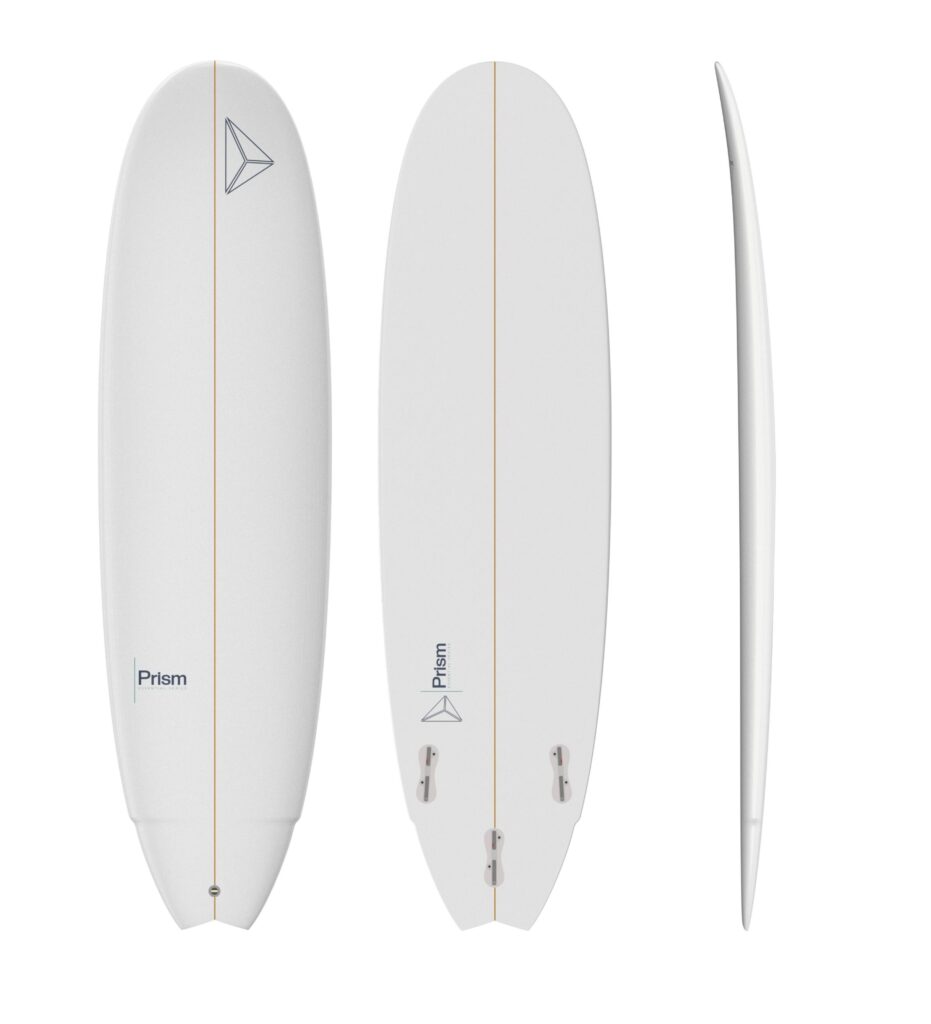
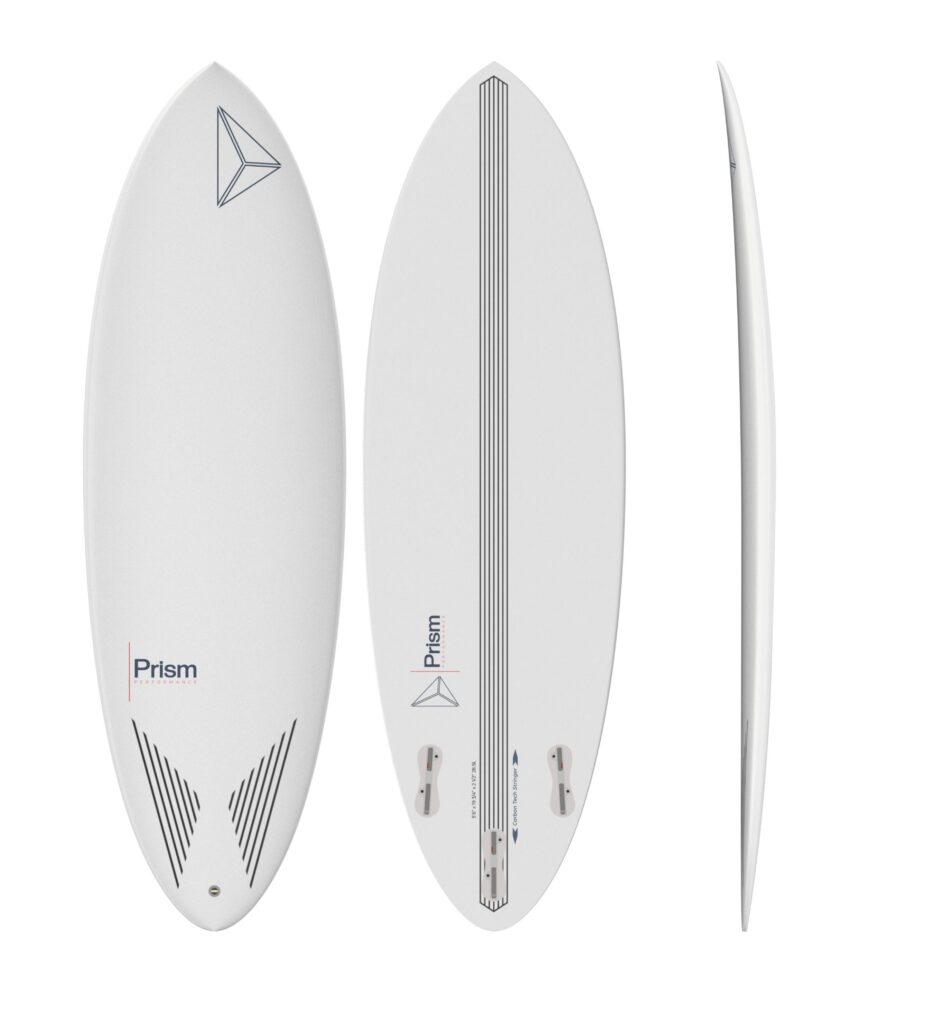
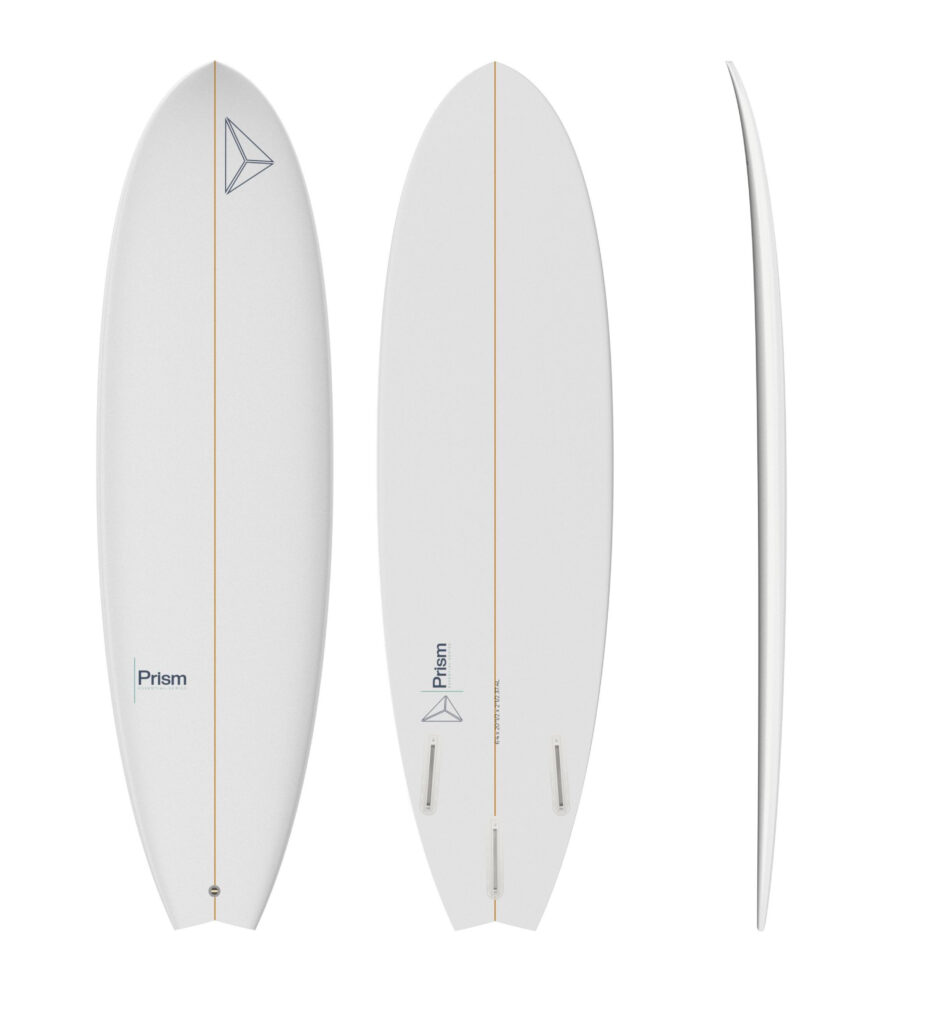

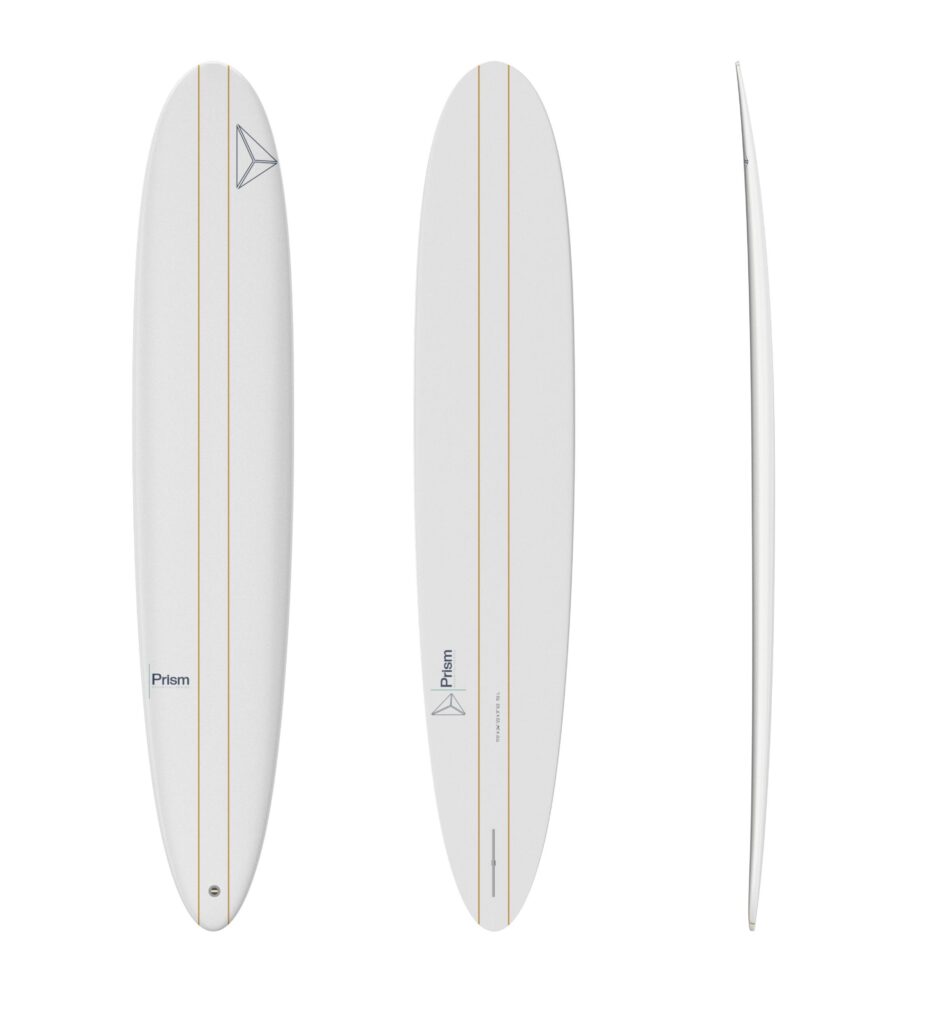
Polyester is the original material. It's been used to make surfboards since the 1960s, and it's still the material of choice for some artisan shapers and professional surfers. But does that make it the best option for you? Not necessarily.
A polyester board combines a PU (polyurethane) foam core with fiberglass and polyester resin. PU foam is generally denser and heavier than EPS, but it offers a natural flex that many surfers love. A wooden stringer (usually balsa or plywood) is often incorporated along the entire length to stiffen the board.
Flex. Really, it all comes down to that. A polyester board "works" under your feet in a way that epoxy doesn't quite replicate. When you initiate a bottom turn and the board flexes slightly before launching you back into the turn, there's a connection with the wave that's quite unique. This is what shapers call "drive"—the board's ability to transform flex into speed and projection.
It is also the easiest material to shape to order. PU foam can be planed, sanded, and worked very easily by hand. That's why almost all custom boards are still made from polyester. If you go to a local shaper for a custom board, there's a good chance they'll be working with PU/polyester.
Let's be honest: polyester doesn't age as well as epoxy. PU foam is porous—if your board gets dinged and you don't repair it quickly, it will absorb water. And a waterlogged board is a heavy board that will yellow, delaminate, and eventually break. We've all seen those yellowed boards in the back of the garage, half peeled off. Nine times out of ten, it's polyester that has absorbed water.
Weight is also a factor. For the same shape, a polyester board weighs 15 to 30% more than an epoxy board. For a 9-foot longboard, that can mean a difference of almost a kilo—which you can feel when paddling and duck diving.
Finally, polyester resin is significantly more polluting than epoxy resin. Styrene fumes released during manufacturing are harmful, and the process generates more waste. This is an increasingly important consideration for surfers who are concerned about their environmental impact.
Polyester is mainly for experienced surfers who are looking for specific sensations and are willing to accept a shorter lifespan in exchange for a particular flex and feel. It is also the material used for custom-made boards. If you surf several times a week and know exactly what you want, polyester makes sense. For all other cases, epoxy is probably a better investment.
Well, we've talked a lot. Now let's look at the figures. We've deliberately simplified things—each board is unique and the finish also plays a role—but this table summarizes the essentials.
| Criterion | Foam (Softboard) | Epoxy (EPS) | Polyester (PU) |
|---|---|---|---|
| Weight | Average | Lightweight | Heavy |
| Strength / Impact resistance | Very good (soft surface) | Very good (hard resin) | Average (breaks easily) |
| Lifespan | 3-5 years | 5-8 years old | 2–4 years |
| Buoyancy | Excellent | Very good | Good |
| Flex / Feel | Limited | Rigid, responsive | Natural, organic |
| Water absorption | Low | Very low | Raised so high |
| Ease of repair | Difficult (soft surface) | Average (epoxy resin required) | Easy (standard polyester resin) |
| Safety | Excellent | Correct | Correct |
| Average price (Prism) | $249–$299 | $369–$599 | N/A (custom only) |
| Ideal for | Beginners, children, fun sessions | All levels, regular use | Demanding surfers, custom |
| Environmental impact | Average | Low to medium | High |
Are you starting to see things more clearly? We hope so. But if the table isn't enough, here's how we would summarize things even more directly.
Foam, without a doubt. It's safe, it's fun, and it's the fastest way to catch your first waves. OurStarter beginner packsinclude the board, leash, and fins—everything you need to get in the water as soon as you receive your package.
To choose the right size, take a look at ourboard size guide. As a general rule, for an adult beginner weighing 70-80 kg, we recommend a minimum of 7'0 — or even 7'2 or 8'0 if you are not at all athletic.
Epoxy is your ally. Have you mastered the basics, are you catching green waves, and are you starting to work on your turns? It's time to switch to a "hard" board that will really help you progress.
OurEssential Series fish boardsare the brand's best sellers for good reason: the fish shape offers reassuring stability for improving surfers, while allowing for a real sense of glide and smooth turns. The6'4 Essential Fishis undoubtedly the most versatile board in our catalog—it can handle almost any conditions found on the French coast.
If you are taller or still looking for stability, oureggsandscalableEssential Series are great alternatives.
This is where it gets a little complicated, because it all depends on what you're looking for. For versatility and durability, thePerformance Series rangein epoxy-carbon is formidable. For feel and style, theOriginal Series rangein Paulownia wood finishes offers a unique look and slightly different sensations thanks to the density of the wood.
And if it's really polyester flex you're looking for, we recommend visiting a local shaper for a custom board. Each shaper has their own style, and a board tailored to your size and waves is an incomparable experience.
You can't talk about materials without addressing their environmental impact. Boards are made from petroleum—resins, foams, paints—which is pretty paradoxical when you spend your life in the water.
At Prism, we don't claim to have solved the problem, but we try to do our part. All our boards are integrated into theEcologic France recycling chain, which guarantees that at the end of their life, they will be treated responsibly rather than ending up in landfill. We also favor epoxy resin (less toxic to manufacture), short supply chains, and just-in-time production to limit transportation and overstocking.
If environmental considerations are important to you, epoxy remains objectively the least harmful choice among conventional materials. And our Original Series range made from Paulownia wood takes things a step further with a natural, renewable material.
Yes, definitely. Epoxy resin forms a harder shell that is more resistant to impact than polyester resin. But be careful, no board is indestructible. A violent impact on a rail or a nose hitting a rock will break it in any case. The difference is that epoxy is more resistant to everyday wear and tear: micro-impacts, friction, transport. Over time, this makes a real difference.
With regular use (2-3 sessions per week), expect 3 to 5 years before the core begins to settle and the board loses rigidity and buoyancy. For occasional use (vacations, weekends), it can easily last 6-7 years. The flexible coating may deteriorate before the core—tears, peeling—but this does not really affect performance as long as the core is intact.
Most softboards have enough grip that you don't need wax. But if you find that your feet are slipping, there's no reason not to apply a thin layer. It won't damage the board.
We strongly advise against it. The transition from a foam board to a shortboard is too abrupt for most surfers. You will be switching from a very stable, voluminous board to something radically different, and you risk regressing instead of progressing. It is better to go through an intermediate stage—afish, anegg, or anevolutionary board—to learn how to surf with less volume before moving down to a shortboard.
Foam, without hesitation. Safety first. We've written acomprehensive guide to children's surfboardsif you want to learn more.
The choice of material is not a question of "best" or "worst." It's a question of finding the right fit for your skill level, your practice, and your expectations. Foam will help you progress quickly and safely. Epoxy will serve you well in the long term, offering excellent value for money and durability. Polyester will give you a feel that the other two materials cannot quite replicate.
If you're still unsure, the easiest thing to do is give us a call. You can reach us at+33 (0)6 13 69 11 87or by email, and we'll be happy to help you find the right board. You can also visit ourshowroom near Nantesto see and compare the boards in person—nothing beats seeing and touching the material for yourself.
To the water!
Découvrez nos planches de surf, combinaisons néoprène et accessoires — conçus pour tous les niveaux, à des prix justes.
Voir le surfshop Nos combinaisons
