shopping_cart
Découvrir nos planches


Partager
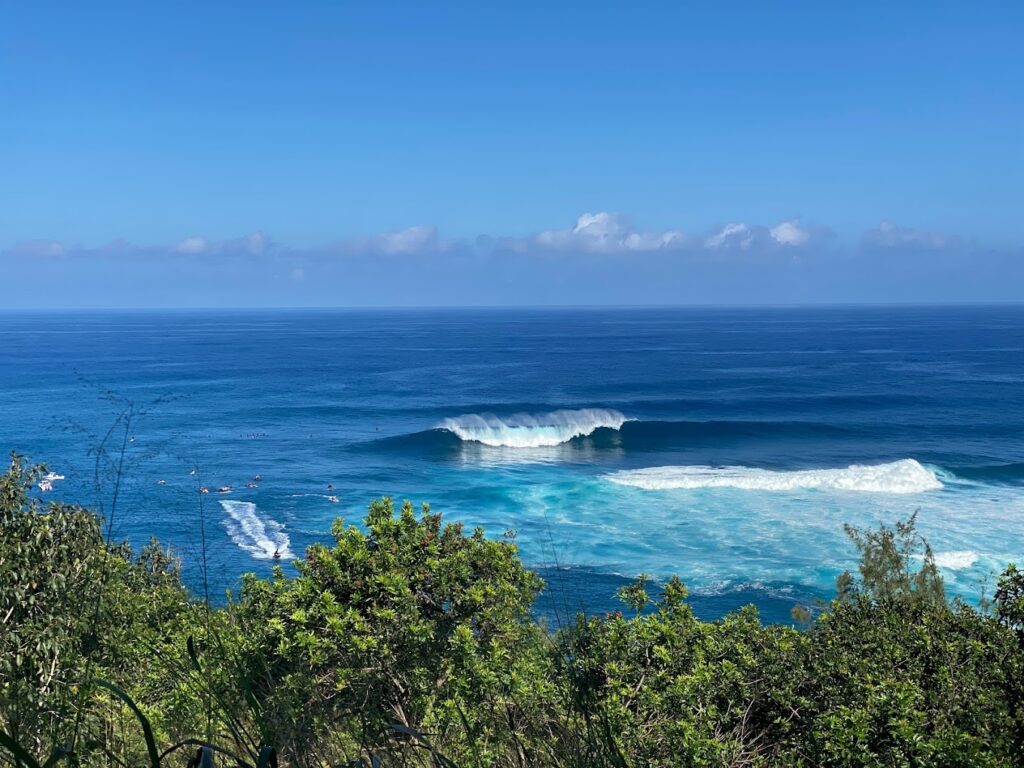
Jaws, known locally as Pe'ahi, stands like a titan in the world of big-wave surfing. Located on the majestic north coast of Maui, Hawaii, this surf spot is synonymous with monster waves and pure adrenaline. Revered and feared by surfers the world over, Jaws embodies the quintessential power of nature, with waves that can reach dizzying heights, often comparable to those of a multi-storey building.
Discovered in the 70s and named by surfers John Potterick, John Robertson and John Lemus, Jaws evokes the immensity and impetuosity of its waves, reminiscent of the fear inspired by a shark encounter. Over the years, this spot has become a playground for the most daring of big-wave surfers, attracting professionals and thrill-seekers from all over the world. The unpredictable and often dangerous nature of Jaws' waves has only added to its myth, solidifying its position as one of the most legendary and respected surf spots on the planet.
Located a short distance from the famous Hana Highway, Jaws remains both accessible and secluded, offering a breathtaking experience for those who dare to challenge its gigantic waves. Jaws' reputation extends far beyond the boundaries of the surfing community, attracting media attention and capturing the imagination of audiences worldwide.
The discovery of the Jaws surf spot by John Potterick, John Robertson and John Lemus in 1975 was a major turning point in the history of big-wave surfing. These pioneers, in search of unheard-of waves and new frontiers to conquer, ventured to Maui's north coast, attracted by rumors of huge swells breaking in this remote area. As they sailed off Pe'ahi, they were confronted with ocean conditions that rapidly evolved from relatively moderate to extraordinary, with massive waves forming before their very eyes.
The name "Jaws" was inspired by the intensity and unpredictability of these waves, which reminded surfers of the power and suddenness of a shark attack, as depicted in the popular film of the same name. The waves at Jaws were like nothing they had ever seen before: gigantic, powerful walls of water, capable of changing unpredictably and posing imminent danger, just like the menacing jaws of a great white shark. This analogy perfectly captured the essence of this unique spot—a place of impressive natural beauty, but also of extreme danger and challenge.
Potterick, Robertson, and Lemus' initial experience at Jaws marked the beginning of a new era in big wave surfing. Their courage and desire to push the limits paved the way for future generations of thrill-seeking surfers. Jaws quickly became synonymous with bravery and adventure, attracting the attention of surfers from around the world eager to test their skills against some of the most intimidating waves on the planet. The name "Jaws" has become iconic, encapsulating both the terror and the irresistible appeal of this legendary spot.
The evolution of surfing at Jaws, in particular the switch from traditional surfing to tow-in surfing, marks a revolution in the way giant waves are approached. Prior to the 90s, the spot was largely unexplored due to the size and power of the waves, which made paddle-in (rowing to catch a wave) extremely difficult, if not impossible. The major challenge lay in the ability to reach these colossal waves by arm power alone.
It was against this backdrop that Laird Hamilton and Dave Kalama, among other pioneers such as Darrick Doerner and Buzzy Kerbox, introduced and perfected tow-in surfing at Jaws in the early 90s. This method, consisting of being towed by a jet-ski to achieve the speed needed to surf big waves, completely changed the game. It gave surfers access to waves previously considered unattainable, ushering in a new era in big-wave surfing.
Laird Hamilton, in particular, became an iconic figure at Jaws thanks to his daring and technical innovations. His ability to tame the monstrous waves of Jaws with apparent ease inspired a whole generation of surfers to push the boundaries of what was possible in big-wave surfing. The contribution of these surfers also led to significant advances in safety, as tow-in required close coordination between the jet-ski pilot and the surfer, as well as specialized equipment to manage the risks inherent in surfing such waves.
The impact of Hamilton, Kalama and others on Jaws has been profound, transforming the surf spot into a theater where human and technical limits are constantly pushed. This evolution has also helped to raise Jaws' profile, transforming it into a reference point for big-wave surfing and a must-see venue for international events and competitions.
The massive waves of Jaws are the result of a unique combination of weather and ocean conditions. It all starts with powerful winter storms in the North Pacific, which generate violent winds of 40-50 knots. These winds push the ocean surface, creating huge swells that propagate rapidly over great distances. When these swells reach the shallower waters near Maui's north coast, they are first channeled into an ancient ocean trench more than 100 feet deep, then rise rapidly onto a shallow reef about 20 feet deep. This abrupt vertical leap into the seafloor propels the wave energy upwards, creating Jaws' characteristic huge walls of water.
From a surfer's point of view, Jaws presents considerable physical and technical challenges. First, there's the sheer size of the waves, often comparable to multi-storey buildings. Surfing such waves demands exceptional physical condition, indomitable courage and high-level technical skill. Surfers must be able to handle high speeds and powerful wave-generated forces, while navigating in an extremely unpredictable and dangerous environment.
Risks include potentially fatal falls, being caught in a powerful underwater current or being thrown against the reef. In addition to physical strength, surfing at Jaws requires rigorous mental preparation. Surfers must be able to overcome fear and stay focused in extreme conditions.
In short, Jaws is not just a test of surfing skill, but also a test of physical strength, courage and mental resilience. That's what makes Jaws one of the most feared and respected surf spots in the world.
The Jaws surf spot has been the scene of many historic moments and has seen the emergence of iconic surfers who have left their mark on the history of this mythical spot.
Paige Alms is a major figure in the world of women's surfing at Jaws. A native of Maui, she has distinguished herself by her mastery and audacity on these gigantic waves. Alms is a pioneer, pushing the boundaries of women's big-wave surfing and repeatedly winning the Pe'ahi Challenge, a prestigious competition held in Jaws.
Maria Souza, another exceptional surfer, has also made her mark at Jaws. As one of the first women to surf this spot, she paved the way for other surfers and helped change the perception of big-wave surfing for women.
Kai Lenny, a modern surfing prodigy, is famous for his versatility and innovation. Lenny has regularly challenged the waves of Jaws, demonstrating uncommon technique and creativity. His modern approach to surfing, including foil surfing, has influenced the way Jaws waves are surfed today.
Mark Visser is renowned for having surfed Jaws at night, a feat that pushed the limits of what was possible. Armed with boards fitted with lights
 LED, Visser tackled the massive waves of Jaws in the dark, creating spectacular and unforgettable visual moments.
These surfers, among others, have helped write the history of Jaws. They set records, overcame unimaginable challenges and inspired generations of surfers. Their exploits are not only athletic feats, but also testaments to courage and determination in the face of one of nature's most intimidating forces.
Jaws continues to be a place where surfing history is written and rewritten, a place where the limits of fear and skill are constantly tested. The spot's reputation stems not only from the size and power of its waves, but also from the exceptional surfers who have captured the world's imagination with their bravery and artistry.
Jaws, with its gigantic waves and dramatic atmosphere, has had a considerable impact on surf culture and its image throughout the world.
s media and films. This legendary spot has become a symbol of extreme surfing, representing not only a physical and mental challenge for surfers, but also a breathtaking visual spectacle for spectators. This duality has attracted worldwide media attention, making Jaws a favorite subject in documentaries, surf films and even mainstream media.
In surf culture, Jaws has been immortalized through numerous films and documentaries that capture the intensity and majesty of this spot. Films such as Riding Giants and documentaries such as 100 Foot Wave have presented Jaws from different angles, highlighting both the beauty and brutality of its waves. These productions have helped to reinforce the myth of Jaws, transforming it into a quasi-mythical place in the collective imagination of surfers and non-surfers alike.
Jaws has also played a key role in big wave surfing events and competitions, attracting the world's best surfers. Competitions such as the Pe'ahi Challenge are part of the World Surf League's Big Wave Tour, where Jaws is often the scene of incredible performances and historic moments in big wave surfing. These events not only showcase the talent and courage of surfers, but also raise public awareness of the demands and risks of this extreme sport.
In short, Jaws' impact extends far beyond the boundaries of the surfing world. It has helped shape the perception of big-wave surfing, inspiring respect and admiration while drawing attention to incredible human prowess and the raw power of nature.
Safety at Jaws, given the immensity and power of the waves, is a major concern. Surfers who dare to tackle this spot must be extremely competent and well prepared. Safety measures often include the use of jet-skis for tow-in surfing, enabling a faster and safer approach to the waves. In addition, rescue teams specialized in big-wave surfing are often present, equipped with jet-skis to
intervene rapidly in the event of an accident. These measures are essential for managing the risks associated with wave power, strong currents and underwater reefs.
In addition to surfer safety, environmental conservation around Jaws is also crucial. Conservation efforts aim to protect the area's unique ecosystem, including the reef and marine wildlife. This includes the responsible management of crowds and tourism activities to minimize environmental impact. Local conservation initiatives are working to raise awareness and involve the community in protecting this remarkable natural site.
The combination of rigorous safety measures and conservation efforts helps maintain Jaws not only as an iconic surf spot, but also as an unspoilt natural environment appreciated by surfers and nature lovers alike.
Découvrez nos planches de surf, combinaisons néoprène et accessoires — conçus pour tous les niveaux, à des prix justes.
Voir le surfshop Nos combinaisons
